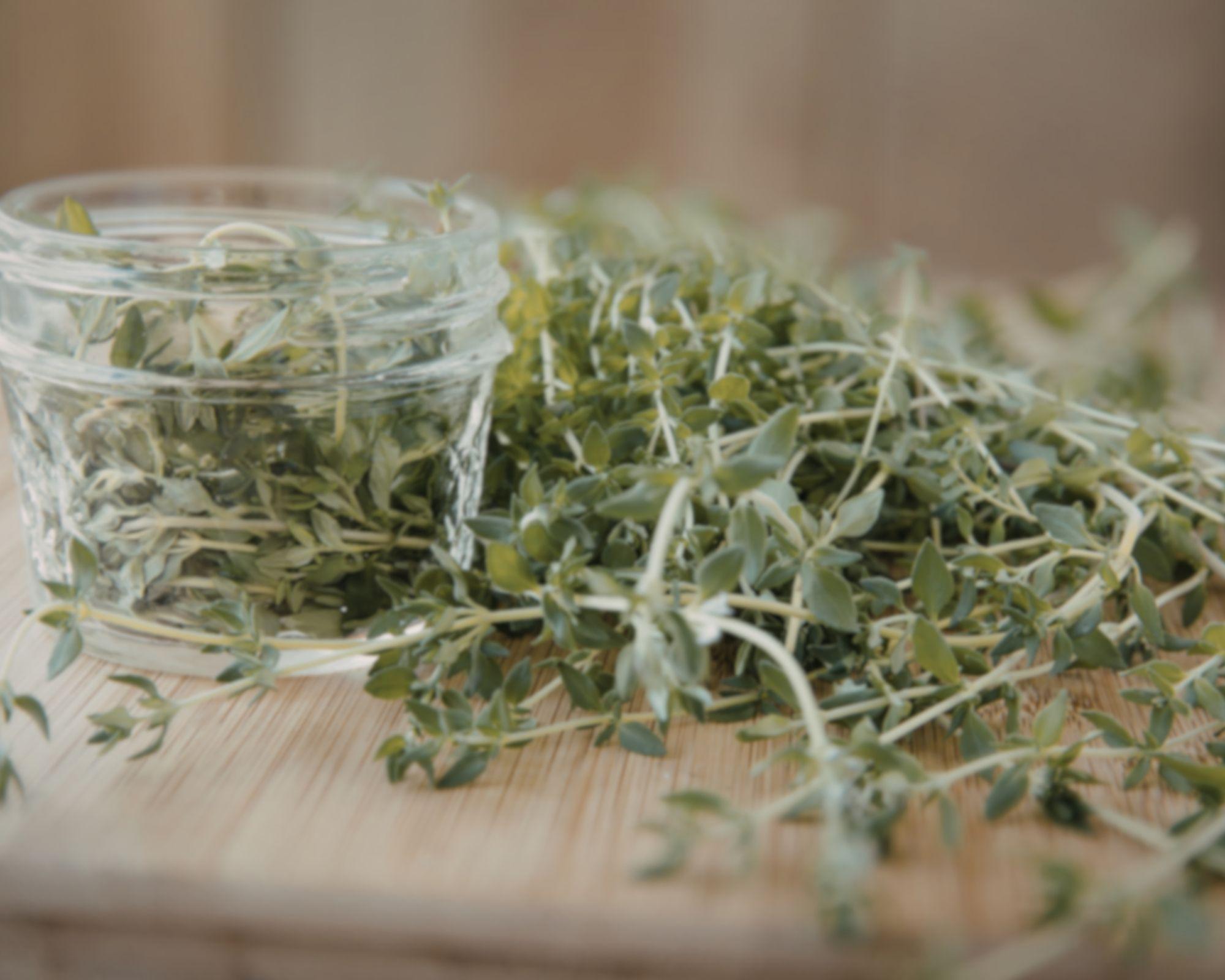
Thyme Leaf {Organic}
Thyme leaf is a fragrant herb traditionally used for both respiratory and skin support. Traditionally used for its natural antimicrobial and antioxidant properties. Thyme helps cleanse and protect while supporting the body’s natural defenses.
Do you ever feel like food just sits in your stomach after you eat? Or—on the flipside—like it moves through wayyy too fast?
Do you know the feeling when you or your kiddos just can’t shake an irritating cough that’s keeping you up at night? And giving you a sore throat? And maybe it’s accompanied by a tight, ticklish feeling in your chest or you just can’t seem to catch a full breath?
And speaking of breath—would you appreciate having natural freshness support on hand?
If you’re nodding yes, then thyme could be just the herbal ally for you!
You might need thyme if…
• You’re bothered by indigestion or diarrhea
• You or your littles are kept up at night (or irritated during the day) with a cough
• You have a sore throat
• Your chest feels tight
• You want a natural breath freshener
• Your brain feels foggy
Benefits of Thyme
• Supports healthy lungs and clear breathing
• Promotes digestive ease and balance
• Traditionally used to help with oral cleanliness and comfort
• Used topically to support skin health
• Aroma is used to promote a clear, calm mind
Common ways to use Thyme
• Tea: For a lung-loving, throat-comforting, digestion-supporting tea, steep 1 tsp dried or 1 Tbsp fresh thyme in hot water for at least 15 minutes before relaxing and enjoying. Great as a soothing gargle, after it cools.
• Tincture: Extracted into alcohol or glycerin for a potent, easy-to-take formula. Available at stores or online, or if you like to DIY, it’s easy to make your own—here’s a guide!
• Essential oil: Used topically for skin support or inhaled to clear the mind. Not for internal use.
• Seasoning: Used fresh or dried to add herby depth to soups, stews, pasta dishes, and more. Considered a culinary herb that “marries flavors.”
• Household cleaner: Contains thymol, a powerful cleaning agent used to disinfect surfaces. Our lemon-thyme Cleaning Spray Concentrate keeps surfaces clean and our families safe from harsh chemicals.
Growing and Foraging Information
Thyme is an easy-to-grow perennial (comes back every year) that thrives without a lot of fuss. It will grow well in the ground or in containers, likes dry soil with good drainage, and only needs to be fertilized once a year in early Spring. Thyme loves full sunlight and will grow indoors or out, as long as it’s bright.
It can be a little tricky to start thyme plants from seed, so if you want to make it easy, buying an already established plant from a garden center or farm is a simple way to get started.
Thyme can also be found growing wild in dry, rocky soil, and is edible but often less potent than homegrown. Pollinators love thyme’s flowers, whether wild or domesticated.
It’s great to keep thyme close to the kitchen and harvest often, adding a fresh flavor boost to meals and even cocktails or mocktails. A general guideline is to harvest gently in the first year and no more than 1/3 of your plant at a time, but beyond that—go for it! Thyme is a gift that keeps giving.
Safety Concerns
Thyme is a generally safe medicinal and culinary herb, even for kids. Caution should be taken when ingesting it in large quantities, as it can cause digestive upset. And avoid it if you have an allergy to plants in the Lamiaceae (mint) family, or have estrogen-sensitivity concerns.
It is important to consider safety concerns in the context of history. Many of the departments that bring up safety concerns are responsible for managing pharmaceutical drugs that have been manufactured in recent history. In the United States, there is no controlling authority or regulatory board specific to herbs. The most common concern these organizations raise about herbal safety is what they describe as “insufficient evidence to determine safety.” Since there is no way to patent a naturally growing plant, there is often insufficient funding to conduct massive human studies.
Drug Interaction: If you have any health concerns or are taking any prescription medication, please consult with your health care provider before adding new herbs to your diet.
Breastfeeding and Pregnancy: Check with your midwife or natural practitioner before adding large quantities of thyme to your routine.
Select Studies About Thyme
A Focused Insight into Thyme: Biological, Chemical, and Therapeutic Properties of an Indigenous Mediterranean Herb - PMC
https://pmc.ncbi.nlm.nih.gov/articles/PMC9147557/
Frontiers | Wild thyme (Thymus serpyllum L.): a review of the current evidence of nutritional and preventive health benefits*
https://www.frontiersin.org/journals/nutrition/articles/10.3389/fnut.2024.1380962/full#sec39