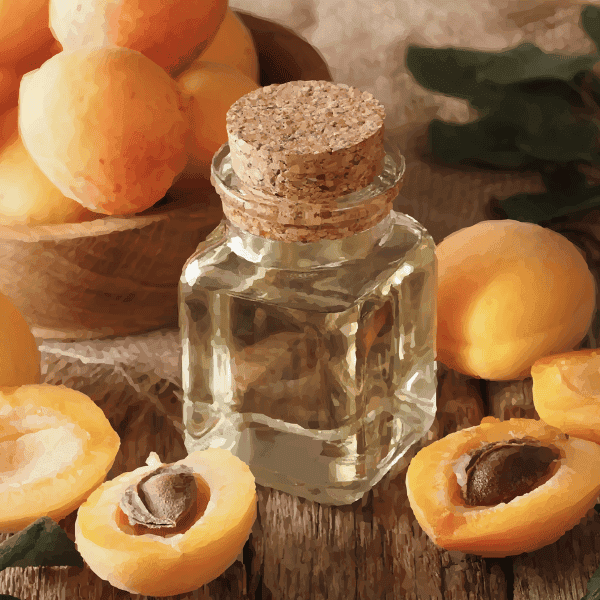
Saponified Apricot Oil {Organic}
Apricot oil is a lightweight, moisturizing oil, derived from the kernels of apricots. Rich in essential fatty acids and vitamins A and E, apricot oil is known for its nourishing and hydrating properties, making it beneficial for both skin and hair care. It absorbs quickly without leaving a greasy residue, making it a popular choice for moisturizers, facial oils, and hair conditioners.
You might need apricot oil if . . .
Do you have dry itchy skin even though you apply lotion often and drink water? Or maybe you’re looking for a more natural way to moisturize your skin and hair. If these are things you’re struggling with, you may want to consider using apricot oil.
Apricot Oil is a great choice for those who:
- Have dry skin
- Have dry hair
- Need a gentle cleansing ingredient commonly found in handcrafted soaps and natural body care products
Benefits of Apricot Oil
- Gentle cleansing properties
- Conditions skin
- Creamy lather
Common ways to use Apricot Oil
Saponified apricot oil is primarily used in cleansing and personal care products.
You may find it used in:
- Bar soaps
- Handcrafted soap formulations
- Facial cleansing bars
- Body cleansing products
- Shampoo bars
- Plant-based personal care products
Its mild nature and contribution to creamy lather make it a popular ingredient in natural soapmaking.
How it is made
Saponified apricot oil begins as apricot kernel oil, which is extracted from the kernels found inside apricot pits.
To create soap, the apricot oil is combined with a carefully measured alkaline solution, typically sodium hydroxide (lye), through a process called saponification.
The Saponification Process
- Apricot kernel oil is blended with a lye solution.
- A natural chemical reaction occurs, converting the oil into soap.
- Naturally occurring glycerin is created during the process.
- The soap mixture is poured into molds and allowed to cure.
- The finished soap is ready to be used in personal care products.
Once saponification is complete, the apricot oil no longer exists in its original form. Instead, it has been transformed into soap compounds that contribute cleansing, conditioning, and lathering properties to the finished product.
Growing and Foraging Information
It is possible to grow an apricot tree. Apricot trees thrive in USDA hardiness zones 5 to 8, where they experience cold winters and warm summers. Plant bare-root or container-grown apricot trees in the spring. Prepare the soil by loosening it to a depth of at least 18 inches and amending it with organic matter to improve drainage. Water newly planted trees regularly, keeping the soil consistently moist but not waterlogged.
Safety Concerns
There are no known safety concerns.
Breastfeeding and Pregnancy: There are no known contraindications for breastfeeding and pregnancy.
Other Concerns: Apricot oil is a very gentle but effective natural oil. There are very few concerns. As with any food, there is a chance that someone could have an allergy to apricots itself. If you have an allergy to another stone fruit, be cautious and test a very little bit of the oil on a very small part of skin to see if you have an allergy to apricot oil.
Select Study About Apricot Oil
This study talks about the benefits of apricot oil, discussing how it is rich in unsaturated fatty acids, vitamin E active compounds, triterpenoids, carotenoids, phytosterols, and polyphenols.