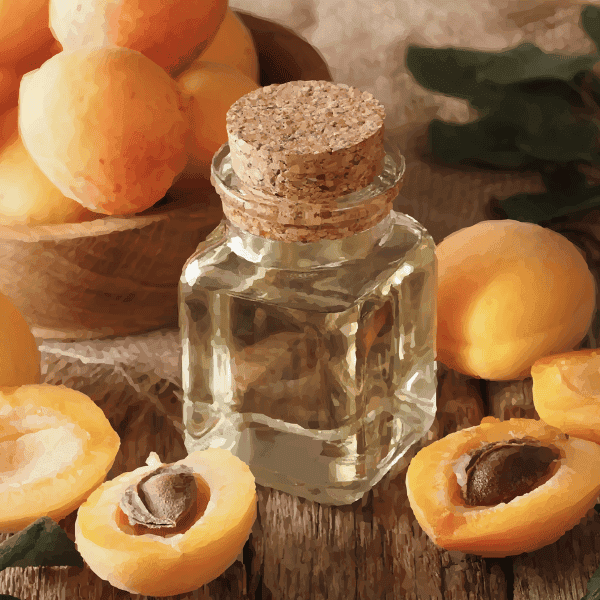
Apricot Oil {Organic}
Apricot oil is a lightweight, moisturizing oil, derived from the kernels of apricots. Rich in essential fatty acids and vitamins A and E, apricot oil is known for its nourishing and hydrating properties, making it beneficial for both skin and hair care. It absorbs quickly without leaving a greasy residue, making it a popular choice for moisturizers, facial oils, and hair conditioners.
You might need apricot oil if . . .
Do you have dry, itchy skin even though you apply lotion often and drink water? Or maybe you’re looking for a more natural way to moisturize your skin and hair. If these are things you’re struggling with, you may want to consider using apricot oil.
Benefits of Apricot Oil
- Naturally moisturizing
- Supports healthy-looking skin
- Conditions hair and scalp
- Supports the skin's natural moisture barrier
Common ways to use Apricot Oil
Apricot oil is a versatile ingredient found in a variety of personal care and wellness products.
You may find apricot oil used as:
- A daily facial or body oil
- A post-shower moisturizer
- A carrier oil for herbal infusions
- An ingredient in lotions, creams, and balms
- A hair and scalp conditioning oil
- A massage oil
- An ingredient in soaps and personal care products
Its lightweight texture and mild scent make it a popular choice for both skincare and hair care applications.
How it is made
Apricot oil is extracted from the kernels found inside apricot pits. After the fruit is harvested, the pit is removed and opened to access the nutrient-rich kernel within.
The kernels are cleaned and processed before the oil is extracted.
Cold Pressed: This is the best way to get apricot oil. A machine presses the kernels in a cold room or at room temperature, and the oil leaks out and is collected. This process is best for preserving all the nutrients the oil has. The apricot oil we use is cold pressed.
Hot Pressed: This is very similar to cold pressed, only the kernels are heated up first. The heat makes it so that you can get more oil, but the oil has less nutrients and can go bad faster.
Chemical extraction: This process involves chemistry. Chemicals (known as solvents) are used to get the oils out. These chemicals are not good for our hair or skin, and nutrients are lost in the process as well. This is not a beneficial process if you want all the benefits of apricot oil.
Growing and Foraging Information
It is possible to grow an apricot tree. Apricot trees thrive in USDA hardiness zones 5 to 8, where they experience cold winters and warm summers. Plant bare-root or container-grown apricot trees in the spring. Prepare the soil by loosening it to a depth of at least 18 inches and amending it with organic matter to improve drainage. Water newly planted trees regularly, keeping the soil consistently moist but not waterlogged.
Safety Concerns:
There are no known safety concerns.
Breastfeeding and Pregnancy: There are no known contraindications for breastfeeding and pregnancy.
Other Concerns: Apricot oil is a very gentle but effective natural oil. There are very few concerns. As with any food, there is a chance that someone could have an allergy to apricots itself. If you have an allergy to another stone fruit, be cautious and test a very little bit of the oil on a very small part of skin to see if you have an allergy to apricot oil.
Select Study About Apricot Oil
This study talks about the benefits of apricot oil, discussing how it is rich in unsaturated fatty acids, vitamin E active compounds, triterpenoids, carotenoids, phytosterols, and polyphenols.